
Job Costing for General Contractors: Where Your Margin Actually Goes
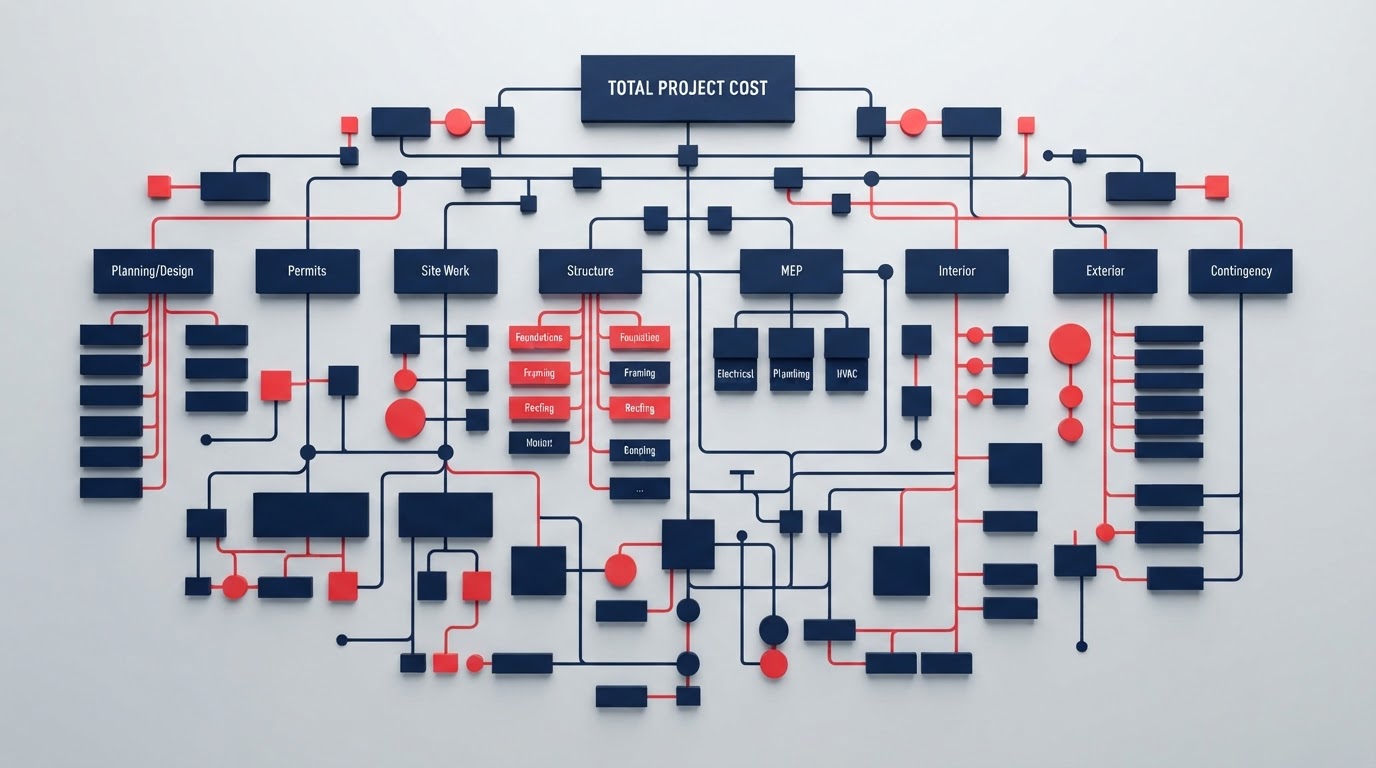
Most GCs know their total revenue and total costs. Far fewer can tell you, per job, whether they made or lost money — and where the margin went. That's what job costing fixes, and it's the difference between running a construction business on instinct and running it on numbers.
What job costing actually tracks
Job costing means every cost — labor, materials, subcontractors, equipment rental, and overhead allocation — is tagged to a specific job. At the end of the month, you see a per-job profit and loss. You know which jobs made money, which ones didn't, and which cost categories ate the margin.
- Labor: hours and burdened cost by job
- Materials: purchases and allocations by job
- Subcontractors: contract and change-order costs by job
- Equipment rental: usage hours or allocation by job
- Overhead: a reasonable allocation across active jobs
Why lenders care about it
If you're seeking construction financing, the lender wants to see that you track costs by job — because it shows operational discipline and because it's what makes a WIP schedule reliable. A GC whose books don't show per-job costs can't produce a clean WIP, and a lender who can't read the WIP won't release the draw. Job costing isn't just a management tool; it's a lender-readiness tool.
The QuickBooks setup problem
QuickBooks supports job costing, but the setup has to be right — the chart of accounts, the items list, the class or customer/job tracking, and the cost-type categories all need to be configured for construction. Most bookkeepers set it up for a generic service business. HLD sets it up for construction specifically, so the numbers that come out are the numbers a lender expects to see.
When your job-cost tracking and your lender package come from the same books — and the same desk — the WIP you hand a lender is the WIP you run your business on. That's the advantage of having bookkeeping and capital under one roof.
Want this kind of analysis on your deal? Book a 30-minute call — we'll walk through the numbers with you.